
High Protein Everything: Necessary or Marketing?
We’ve partnered with Vitality Nutrition‘s Registered Dietitian Courtney Berg to share her best tips to help you improve your overall diet and maintain a healthy lifestyle. Click here to meet Courtney.
Protein has become the nutrient of the moment. From protein powders and bars to protein cereals and cookies, it suddenly seems like everything at the grocery store is “high protein.” While protein is important for health, the marketing around it can be misleading.
Key Takeaways
Focus on foods that naturally contain protein. If a package heavily markets protein, it may simply be a cue to take a closer look at the ingredient list. Real food protein sources are simple, satisfying, and often more nutritious than heavily marketed protein products.
Why Protein Matters
Protein plays many important roles in the body. It helps:
- Build and maintain muscle
- Support immune function
- Increase satiety
- Stabilize blood sugar
As a dietitian, I recommend prioritizing protein-rich foods. Especially for those who are physically active, pregnant, trying to lose weight, or working to build or preserve muscle!
Watch for the Protein “Health Halo”
Food manufacturers know protein sells. When consumers start paying attention to a nutrient, companies often add it to foods that didn’t traditionally contain much protein. This can create what I call a “protein health halo.”
For example, a cookie doesn’t suddenly become a health food because it contains added protein powder. These products are often still high in refined sugars, oils, or carbohydrates.
In some cases, there isn’t much protein in the product at all as the claim “source of protein” can be made with as little as 5 grams.
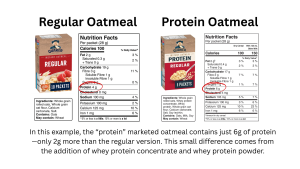
Being aware of marketing tactics helps you make informed choices. If you enjoy a protein-added product, there’s nothing wrong with including it. However, you may find the “real thing” (like a homemade cookie) more satisfying than a processed version with added protein.
Look for Natural Protein
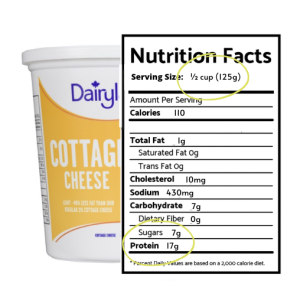
Choose foods that naturally provide at least 15 grams of protein per serving. These foods often don’t need marketing claims to highlight their protein content.
Examples include:
- Eggs
- Poultry
- Fish and seafood
- Meat
- Greek yogurt or cottage cheese
- Tofu
- Lentils and beans
Natural protein sources also provide vitamins and minerals that support overall health and blood sugar balance. If choosing a lower-protein food (e.g. oatmeal), try adding a whole-food protein such as Greek yogurt, milk, or an egg on the side.
What About Protein Powders?
Being aware of marketing tactics helps you make informed choices. If you enjoy a protein-added product, there’s nothing wrong with including it. However, you may find the “real thing” (like a homemade cookie) more satisfying than a processed version with added protein.
Protein powders can be useful but shouldn’t replace whole foods. They may benefit athletes with higher protein needs, busy mornings when a smoothie is practical, or individuals struggling to meet protein needs through food alone.
Protein powders are best used as a supplement to a nutrient-dense diet, ideally with guidance from a Registered Dietitian to select the best one for you and your goals!
Meet Courtney Berg, RD, B.Sc. Nutrition
About Courtney | Courtney Berg is a Registered Dietitian and completed her Bachelor’s Degree in Nutrition from the University of Saskatchewan in 2016. Her approach to nutrition continues to evolve as she learns and grows with her clients at Vitality Nutrition. However, a holistic approach remains the base of her philosophy with an emphasis on understanding how nutrition as well as sleep, mindset, exercise, and the environment work together to influence whole body health.
About Vitality Nutrition | Vitality Nutrition is a collective of Registered Dietitians and Nutritionists supporting clients in Saskatchewan and across Canada! We incorporate a unique and meaningful approach to food, fitness, and performance that empowers clients to build life-long habits and see lasting results.